

Most contractors think the job is done once the permit gets approved.
But in reality, that’s where the biggest risks begin.
Missed inspections, expired permits, and compliance gaps cost contractors thousands every year. Almost all of these issues can be attributed to inadequate management of the building permit lifecycle.
Focusing solely on getting permits approved without tracking the subsequent steps exposes your projects to delays, penalties, and unnecessary stress.
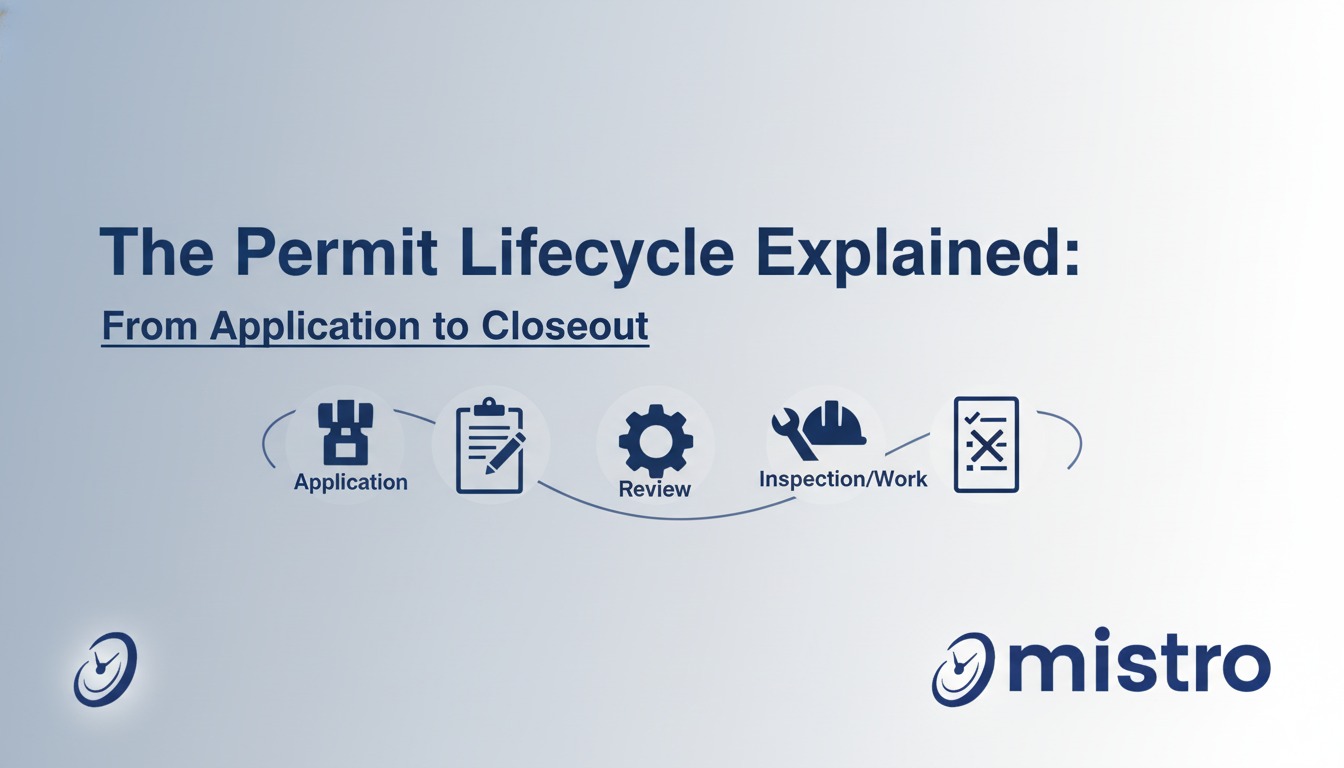
This guide provides a comprehensive overview of the entire lifecycle, from application to closeout, enabling you to manage permits effectively.
The Real Cost of Poor Permit Management
Before we dive into the stages, let’s talk about what’s actually at stake.
Hidden costs contractors face:
- Missed inspections → project delays (days or weeks)
- Expired permits → reapplication fees + downtime
- Failed compliance → fines and rework
- Poor tracking → lost documents and confusion
Without proper building permit lifecycle management, these issues are almost guaranteed on multi-project jobs.
Stage 1: Permit Application (Where Everything Starts)
The permit lifecycle begins long before approval; it starts with accuracy.
Required Documents
Most jurisdictions require:
- Detailed construction plans
- Electrical layouts and load calculations
- Scope of work
- Contractor license details
Missing even one item can delay your project significantly.
This is where early building permit lifecycle management prevents bottlenecks.
Jurisdiction Rules (Why Every City Is Different)
One of the biggest mistakes contractors make is assuming all cities work the same way.
Key differences include:
- Submission formats (online vs in-person)
- Approval timelines
- Inspection requirements
- Fee structures
Using a construction permit tracking tool helps standardize processes across different jurisdictions.
Stage 2: Review & Approval (The Bottleneck Phase)
This phase is where most projects slow down.
What happens here:
- Plan checks for compliance
- Code verification
- Revision requests
Common causes of delays:
- Incomplete applications
- Design inconsistencies
- High workload at permitting offices
Without proper permit portfolio management, tracking multiple submissions becomes chaotic.
Real-World Example
An electrical contractor submits permits for 8 projects:
- 3 are approved
- 3 require revisions
- 2 are delayed due to missing details
Without proper electrical permit status tracking software, keeping track of each status becomes nearly impossible.
Stage 3: Field Inspections (Where Delays Multiply)
Once approved, your project enters the inspection phase, and this is where many jobs get stuck.
Types of Inspections
Rough Inspection
- Conducted before walls are closed
- Verifies wiring and infrastructure
Final Inspection
- Confirms full compliance
- Required for occupancy approval
Common Inspection Problems
- Missed inspection dates
- Failed inspections due to code issues
- Poor documentation
This stage is where permit compliance tracking for electrical contractors becomes essential.
Stage 4: Closeout (The Most Ignored Step)
Many contractors assume the project is done after the final inspection.
It’s not.
Closeout includes:
- Final approvals
- Submission of documentation
- Compliance records
- Official permit closure
Skipping proper closeout creates long-term risks.
Strong building permit lifecycle management ensures nothing is left incomplete.
Lifecycle Stage vs Risk (Quick Breakdown)
Stage | Risk | Impact |
Application | Missing documents | Delays |
Review | Revisions | Weeks lost |
Inspection | Missed scheduling | Rework |
Closeout | Not finalized | Legal issues |
Biggest Lifecycle Risks Contractors Face
1. Expired Permits
Permits have deadlines, and missing them is costly.
Why does this happens?
- No reminders
- Poor tracking systems
- Too many projects at once
This is why permit expiration tracking is critical.
2. Missed Inspections
Missing one inspection can delay your entire project.
Consequences:
- Rescheduling delays
- Failed timelines
- Extra costs
An electrical contractor permit dashboard helps keep everything on schedule.
3. Lack of Visibility Across Projects
Managing multiple permits manually leads to:
- Missed deadlines
- Disorganized documentation
- Poor communication
This is where permit portfolio management becomes a game changer.
What Modern Contractors Use Today
Top-performing contractors don’t rely on spreadsheets anymore.
They use systems designed for building permit lifecycle management.
Key capabilities include:
- Real-time permit tracking
- Automated alerts for deadlines
- Centralized dashboards
- Multi-project visibility
- Integrated compliance tracking
These tools eliminate guesswork and reduce risk significantly.
Manual vs Digital Permit Tracking
Factor | Manual Tracking | Digital Tracking |
Visibility | Limited | Real-time |
Accuracy | Error-prone | Highly accurate |
Efficiency | Slow | Fast |
Compliance | Risky | Reliable |
Scalability | Difficult | Easy |
Modern electrical permit status tracking software gives contractors a major advantage.
How Contractors Track Permit Lifecycle Efficiently
Here’s what an efficient workflow looks like:
- Submit complete applications
- Track status using a centralized system
- Handle revisions quickly
- Schedule and track inspections
- Maintain compliance records
- Close permits properly
This is what effective building permit lifecycle management looks like in real-world projects.
Real-World Use Case
A contractor managing 15+ permits across different cities:
- Uses a centralized dashboard
- Gets alerts for upcoming inspections
- Tracks expiration dates automatically
- Maintains all documentation in one place
Without this system, delays and missed steps are almost inevitable.
Conclusion
Permits aren’t just paperwork; they’re a critical part of project success.
Contractors who master building permit lifecycle management don’t just avoid problems; they finish faster, stay compliant, and scale efficiently.
If you’re still relying on manual tracking, you’re leaving too much to chance.
Take control of your permits with smarter building permit lifecycle management software designed to help contractors track, manage, and complete projects without costly delays.
FAQ: Permit Lifecycle Management
1. What is building permit lifecycle management?
It’s the process of managing permits from application to final closeout.
2. Why is permit expiration tracking important?
It prevents delays, fines, and reapplication costs.
3. What is electrical permit status tracking software?
It’s a system that tracks permit progress and deadlines in real time.
4. How do contractors manage multiple permits?
Through centralized systems and permit portfolio management tools.
5. What happens if a permit isn’t closed properly?
It can lead to compliance issues and legal risks.